Doctoral programs
IDAUP International Doctorate Architecture and Urban Planning
Double Joint PhD Programme with Polis University, Tirana (AL)
IDAUP is a doctoral programme established on the basis of a Double Joint PhD Programme with its main partner, Polis University in Tirana (Albania). It is intended for graduates from all over the world who hold a master’s degree or an equivalent qualification. The cultural rationale underpinning IDAUP concerns the need to address innovative, interdisciplinary, multidisciplinary, and transdisciplinary research topics in the fields of Architecture, Urban Planning, Design, and Building Physics and Integrated Energy Systems in Architecture and Built Environment. Particular attention is paid to the priority objectives of the European Union’s Framework Programme for Research and Innovation and the Horizon Europe programme. The Sustainable Development Goals of the 2030 Agenda, Digital and Energy Transition, Smart Environments, the Internet of Things, artificial intelligence, and robotics represent cross-cutting areas that each research topic may engage with in defining highly innovative lines of inquiry focused on the built environment. This global-scale scenario provides the framework of motivations and potential for the educational project and, consequently, highlights the need to train individuals with strong research aptitudes, capable of working in synergy with basic and applied research sectors in industrial and entrepreneurial contexts, and suited to future roles as trainers and lecturers within education and research institutions.
Academic Board
Unife Members
Theo ZAFFAGNINI (Coordinator)
Veronica BALBONI (Vice-coordinator DA IDAUP)
Other University
Besnik ALIAJ (Rector of Polis University Tirana - PhD Program Vice-coordinator IDAUP)
Manuela ALMEIDA (University of Minho)
Sotir DHAMO (Polis University Tirana)
Mario FERRARI (Polis University Tirana)
Guoqing HE (Zhejiang University, Hangzhou CHN)
Xhimi HYSA (Polis University Tirana)
Llazar KUMARAKU (Polis University Tirana)
Gianni LOBOSCO (Politecnico di Torino)
Skender LUARASI (Polis University Tirana)
Paulo MENDONÇA (University of Minho)
Laura PEDATA (Sheffield Hallam University)
Gang PEI (University of Science and Technology of China, Hefei CHN)
Yuehong SU (Nottingham University, Nottingham, UK)
Merita TOSKA (Polis University Tirana)
Beatrice TURILLAZZI (Alma Mater Studiorum – University of Bologna)
Klodian XHEXHI (Polis University Tirana)
Other institution
Marco MEDICI (INCEPTION S.R.L)
Alessandro PRACUCCI (Levery s.r.l. Società Benefit)
Educational Objectives
The main objective of IDAUP is to train young researchers with a high level of scientific qualification, equipped with multidisciplinary and interdisciplinary skills and expertise suitable for actively and productively engaging in the contemporary debate, at an international level, on research topics related to the four active curricula: Architecture; Urban Planning; Design; Building Physics and Integrated Energy Systems in Architecture and Built Environment.
IDAUP’s educational programme is aimed at the acquisition of knowledge and skills concerning theories, methods and tools, both disciplinary and interdisciplinary, for research in the fields of architecture, urban planning, design and technical physics, also through the strengthening of PhD candidates’ networking abilities with the productive and social sectors and the development of innovative theories and applications.
The multidisciplinary methodological orientation of the educational and research activities is based on the need to train scholars with a solid specialization who are also capable of understanding and interacting with different fields, in the awareness that design, at any dimensional scale, is a complex and constantly evolving process. From this perspective, the programme is also characterized by its focus on developing skills and autonomy in managing the complexities — administrative, legal and others — inherent in research activities, including in relation to Public Administration policies and European policies on environmental, economic and sociocultural sustainability.
Specific knowledge of international market and research scenarios, language skills suited to international contexts, multidisciplinary training and extended research experiences abroad constitute the distinguishing skills of IDAUP PhD graduates.
To achieve these objectives, IDAUP draws not only on the expertise provided by its main partner, POLIS University of Tirana, Albania, but also on the educational and scientific contribution of other prestigious foreign universities acting as Associate Partners, such as the University of Minho in Guimarães, Portugal. These institutions, represented by their faculty members on the Academic Board, make facilities, services and laboratories available to IDAUP PhD candidates. Relations with industrial and entrepreneurial organizations operating in the sector are also aimed at enhancing students’ research along the most strategic lines in terms of sustainability, the industrial strengthening of green production policies, and the development of virtuous circular economy practices and productive energy efficiency. In this respect, the privileged relationship is with Focchi SpA.
Research Topics
With a view to offering a research training programme aligned with the responsibilities that contemporary society assigns to the themes of architecture, the city and, more generally, the framework of transformative actions concerning territories and the built heritage in terms of environmental, economic and sociocultural sustainability, the Academic Board provides for the activation of four curricula, within which the research topics guiding the development of the thesis are specified.
1) Architecture
This curriculum focuses on identifying and deepening strategies capable of creating synergies among the rationales of design, process, and production, encompassing technologies based on the use of innovative materials, industrial design, and applications in restoration and upgrading of existing buildings. It pays special attention to themes such as green policies (design and supply chain in the construction sector), digital innovation, energy efficiency in buildings, components, and industrial production cycles.
1.1) Design theories and methods and sustainable constructions;
1.2) Innovative technologies and materials for industrial, building and structural design;
1.3) Materials and techniques for the conservation of historical heritage, building maintenance and Life Cycle Assessment (LCA) considerations;
1.4) Cultural heritages. Innovations and ICT processes for cultural heritages use and conservation;
1.5) Building envelope for the digital era. Strategies and innovative solutions (product and process) for multifunctional prefabricated façade in digital construction.
1.6) Digital transition: product, process and business models in the digital age for the construction industry and built environment;
1.7) Green Transition strategies for increasing sustainable practices in the construction industry, within the built environment;
1.8) Architectural and urban design methodologies, adaptive reuse tools, and strategies for art and culture in inclusive cities and sustainable environments;
1.9) Architectural Heritage in historical context: new perspectives and strategies for sustainable conservation.
2) Urban Planning
This curriculum addresses contemporary issues of public space, focusing on the evolution and transformation of the socio-economic and environmental context. It explores the role of research as a critical tool for analyzing, interpreting, and designing urban and territorial transformations from a sustainable development perspective, adopting an interdisciplinary approach with an international outlook.
2.1) The city of today and tomorrow: balancing environmental protection with the regeneration of the existing urban fabric. Public space, transformation needs, and new social demands for quality living and urban livability.
2.2) The role of the historical and cultural heritage of the built environment and landscape in urban development in a post-industrial economy, with particular reference to sustainable local development policies.
2.3) Territory, landscape, and the regeneration of the built environment, between infrastructural interventions, new energy sources, and climate change.
2.4) Territorial / city governance and targeted development policies through land management, economic and financial tools.
2.5) Climate change, new socio-demographic configurations, and health determinants: cities facing the challenges of adaptation and the fight against inequalities.
2.6) Settlement models, sustainable mobility, big data, and new technologies in support of policies, programs, and projects for greater urban quality and livability.
2.7) Design, history, and theories of urban form: the sustainability of settlements across centuries.
3) Design
The curriculum fosters the development of advanced research activities in Product, Communication and Service Design, with the aim of contributing to innovation in cultural, social, environmental and productive systems, understood as complex ecosystems of actors, practices, and material and immaterial devices.
The programme critically engages with the challenges of contemporary society, identifying transition trajectories towards sustainability, inclusion, accessibility, and collaboration among public and private actors.
3.1) Inclusive design, Design for all and Universal accessibility for products, services, spaces, and interfaces.
3.2) Product and service design for health, wellbeing, welfare, public administration, and communities: co-design, implementation, impact assessment, prevention, care, rehabilitation, eHealth and care systems;
3.3) Product–service systems for sustainable transitions: models, governance, scalability;
3.4) Design of products and services for the sustainable, accessible, visualization and inclusive fruition of cultural heritage, integrating conservation, user experience, and social impact;
3.5) Visual communication, Information and Editorial design: processes, tools, and AI for quality, ethics, and content readability;
3.6) Sustainable fashion and Innovative textiles: new consumption models, transparent supply chains, traceability, circular fashion and bio-based materials, smart textiles, comfort and performance for the person;
3.7) Design for sustainability, circular economy and LCA/LCC for products and services: metrics, trade-offs, design decisions-simulation, computational design.
4) Building Physics and Integrated Energy Systems in Architecture and Built Environment
A curriculum dedicated to the analysis and modelling of energy and environmental processes in the built environment, integrating foundational scientific principles with advanced methods for the ecological and digital transition. The programme addresses thermo-physical, environmental, and performance phenomena in buildings and urban systems through simulation, experimentation, and sustainability assessment, with specific attention to decarbonisation, climate resilience, and human well-being.
4.1) Retrofit of existing buildings and revamping of their energy systems through responsible and sustainable innovation, based on low-carbon technologies, innovative materials, renewable energy sources, and novel energy storage systems;
4.2) Indoor environmental quality, comfort, and well-being through passive, active, and adaptive environmental control strategies, with regard to emerging energy technologies for the built environment, and industry;
4.3) Innovative energy control systems and methods for energy saving and optimisation in buildings and districts;
4.4) Resilience of energy systems in the built environment, including critical infrastructure, risk management, climate adaptation, urban heat island mitigation, smart grids, energy communities and policies;
4.5) Digital twins of technologies, control systems, buildings and urban settlements to enhance their energy saving and management through numerical advanced simulation.
Training Program
IDAUP training activities are proposed by the Academic Board, taking into account the active curricula and the recommendations of the Advisory Board, and are organized by the PhD Program Supervisor, a position established for each of the two consortium sites and appointed from among the members of the Academic Board. To ensure a calendar that is as consistent as possible with the research lines, also on the basis of the indications received from the Advisory Board, external experts from non-academic backgrounds — for example, spin-off founders or public administrators — are invited to carry out training activities, in order to address the contemporary labour market from multiple perspectives. “Basic” training in scientific research methodologies and in the criteria for disseminating and valorising research results is always guaranteed. The training programme is completed by activities organized by IUSS. Participation in courses on project management, communication, advanced computing and Artificial Intelligence is also recommended by the Advisory Board, in order to strengthen the knowledge and skills required by the current context. The calendar of training activities is published in advance on the institutional websites.
Disciplinary training activities are scheduled within two workshops held at the Ferrara and Tirana campuses, where PhD students are expected to engage in peer exchange and group collaboration with a view to strengthening interdisciplinary relations. Starting from the 40th cycle, following a recommendation from the Advisory Board, specific days dedicated to discussion and collective debate with faculty members and PhD candidates — “Presentation Days” — have been introduced, in order to stimulate constructive dialogue as much as possible and to support students’ scientific development.
Each PhD candidate is supervised by a Supervisor and by one or more Co-supervisors appointed by the Academic Board. They are assigned within the first month of the programme, on the basis of the consistency between the faculty members’ expertise and the topic of the research project. No more than three PhD candidates may be assigned to the same Supervisor. To ensure and encourage the transdisciplinary nature of research and internationalization, PhD candidates may also be supported by an “External Expert” appointed by the Academic Board: a prominent figure in the academic, industrial and/or administrative field who is able to enrich specific aspects of the research.
Training and research activities
In addition to working in the offices, laboratories and research centres of their Supervisors, PhD candidates have access to dedicated spaces and facilities, including a study room with fixed equipment, and they may freely access library services through university credentials. The associated institutions, such as the University of Minho, also provide operational facilities, archives, machinery and software in order to facilitate mobility experiences, while the industrial partner Focchi SpA hosts the PhD candidates at its plants every year, facilitating contacts with affiliated Research Centres and supporting the logistics of research missions. In order to strengthen the infrastructures dedicated to the use and mastery of digital tools, as requested by the Advisory Board, a new Advanced Computing Laboratory has been established, equipped with six high-performance workstations available to PhD candidates.
To foster the scientific growth of PhD candidates, without limiting their commitment to research activities, up to 5 ECTS credits may be recognized for supplementary teaching activities carried out by PhD students, corresponding to 20 hours — 1 ECTS credit per 4 hours — while up to 10 ECTS credits may be recognized for authorized teaching and methodological tutoring activities, corresponding to 40 hours — 1 ECTS credit per 4 hours.
Programme structure
IDAUP does not provide positions without scholarships: all PhD candidates benefit from adequate monthly financial support for the three-year duration of the programme. In order to carry out research activities with operational autonomy, each PhD candidate receives a personal financial allocation for the three-year period — paid as a lump sum in the first year — called the “Research Budget”, corresponding to an amount not lower than 10% of the scholarship. Subject to the agreement and authorization of the Supervisor, this resource may be used by the PhD candidate to cover research costs required for their training path, such as research missions, participation in conferences, seminars and similar activities.
IDAUP is a Double Joint PhD with a strong international vocation. The overall period that PhD candidates must spend abroad is at least six months, to be completed in one or more periods at suitable universities, research bodies, industries and public institutions, with reference to the aims and subject of the research.
Training, research and third-mission activities are evenly distributed: of the 60 ECTS credits to be earned in the first year of the programme, 20 are provided by POLIS University, 20 by the University of Ferrara and 20 by the respective home institution, or by IUSS or other associated partners.
Over the three years of IDAUP, each PhD student is expected to achieve the following objectives: completion of a total of 180 educational credits; research activity abroad for a period of at least six months outside the partner institutions; publication of scientific contributions, in accordance with Article 14 of the IDAUP Internal Regulations; and attainment of an English language certification at C1 CEFR level.
PhD candidates must enter their research outputs in the UNIFE institutional repository, “SFERA”. They may publish contributions in the volumes of the “OMB Series” collection and, more recently, in the Open Access journal affiliated with POLIS University Press.
Internationalization and Public Engagement
Composition of the Academic Board
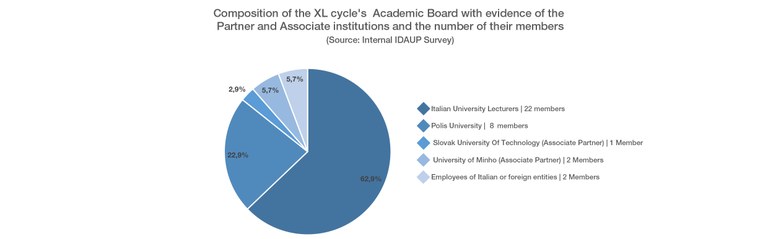
The members of the Academic Board are professors and researchers belonging to the 11 research macro-areas consistent with the educational objectives and active curricula. They are affiliated with partner institutions — UNIFE and POLIS University — associated institutions such as the University of Minho, other Italian and foreign universities, industrial partners and spin-offs. The proportion of foreign faculty members on the Academic Board is well above 30%. The Advisory Board also includes a significant number of foreign academics and experts, with whom the programme engages in order to update its educational offering.
Mobility of PhD candidates
PhD candidate mobility includes a minimum research period of six months abroad at suitable universities, research bodies, industries and public institutions. This is complemented by other mobility experiences, such as European Erasmus+ projects including Drive and Vtech, as well as EU for Innovation projects. During periods abroad, PhD candidates receive a 50% increase in their scholarship. In addition, students may obtain resources by applying to international mobility calls launched every year by IUSS, the UNIFE Internationalization Office and POLIS Tirana.
Research lines
The cultural motivation underlying IDAUP concerns the need to address innovative, interdisciplinary, multidisciplinary and transdisciplinary research topics in the fields of Architecture, Urban Planning, Design, and Building Physics and Integrated Energy Systems in Architecture and Built Environment, with particular attention to the priority objectives of the European Union’s Framework Programme for Research and Innovation and of the Horizon Europe programme. The Sustainable Development Goals of the 2030 Agenda, the Digital and Energy Transition, Smart Environments, the Internet of Things, artificial intelligence and robotics represent cross-cutting areas that each research topic may engage with in defining highly innovative research paths. Relations with industry in the sector are also aimed at qualifying research according to the most strategic European lines relating to sustainability, green production policies, the circular economy and productive energy efficiency. Research has been funded on the green transition of the Western Balkans — GreenFORCE Project, Horizon EU — energy efficiency in historic villages — Emilia-Romagna Region, European Social Fund Plus Programme 2021–2027 — thermochemical and phase-change materials — ECHO Project, Horizon EU — and 3D modelling and AI technologies — Bruno Kessler Foundation.
Co-supervision agreements and Doctor Europeus
IDAUP provides for the activation of both incoming and outgoing co-supervision agreements, including with Mackenzie Presbyterian University and the Universidade de São Paulo, USP. Following a suggestion from the Advisory Board, the international vision of the programme has been strengthened through the activation of a new co-supervision agreement with the Universidade Estadual de Campinas, Brazil. Where the necessary conditions are met and subject to the favourable opinion of the Academic Board, students may apply for the award of the Doctor Europeus title.
Relations with the productive and social sectors
The educational offering is aimed at the acquisition of knowledge and skills also through the strengthening of PhD students’ networking abilities with the productive and social sectors, as well as through attention to the development of skills and autonomy in managing the complexities inherent in research activities, including in relation to Public Administration policies and European policies on environmental, economic and sociocultural sustainability. Specific knowledge of international market and research scenarios, language skills suited to international contexts, multidisciplinary training and extended research experiences abroad constitute the main competences.
To achieve these objectives, IDAUP draws not only on the expertise provided by the partner institution POLIS, but also on the educational and scientific contribution of other prestigious foreign universities, such as the University of Minho in Guimarães, Portugal. On the recommendation of the Advisory Board, international partnerships have been implemented through the inclusion on the Academic Board of faculty members from foreign universities: Zhejiang University in Hangzhou, China; the University of Science and Technology of China in Hefei, China; and the University of Nottingham in Nottingham, United Kingdom. Relations with industrial and entrepreneurial organizations active in the sector are also aimed at qualifying PhD students’ research according to the most strategic lines in terms of sustainability, the industrial strengthening of green production policies, and the development of virtuous circular economy practices and productive energy efficiency. In this respect, the privileged relationship is with Focchi SpA.
IDAUP’s third mission includes the workshops organized annually by POLIS. The topics addressed, which are relevant to territorial, environmental and infrastructural development and to the protection of cultural heritage, are defined by POLIS and UNIFE together with local stakeholders. These activities are recorded on the dedicated platform in order to monitor the University’s Third Mission activities. In addition, further scholarships reserved for employees of Albanian public research institutes and centres may be activated at POLIS.
Operational and Scientific Structures
Equipment and/or Laboratories
DA: 3D-XR_Lab – Laboratory for three-dimensional digital modelling and immersive environments; A LATERE – Laboratory of Architectural History; A<E – Architecture<Energy Research Centre; ARCDES – Centre for the Development of Integrated Design Services for the City, the Environment and the Landscape; CDSLab – Communication Design for Sustainability; CITER – Urban and Territorial Design Laboratory; DIAPReM – Departmental Centre for the Development of Integrated Automated Procedures for Monument Restoration; LABORA – Architectural Restoration Laboratory; LEM – Technology Laboratory; MD – Material Design Laboratory; QUID – Design Research Unit; RELY – Research Laboratory on Energy Conversion, Storage and Heat Transfer; Sealine – Departmental Research Centre for the Development of Coastal Systems and Tourism; SMART-SALU – Smart Structural Analysis Research Unit.
POLIS: Sust-LAB for materials sustainability testing; Model Laboratory for landscape and architecture modelling using CNC machines; VEEL – Virtual Economic Experimental Laboratory; BuildLab; makeLaB Digital Fabrication Robotics; PrintLab; Lighting Lab.
Library holdings
More than 31,473 volumes.
Subject areas: Construction Science and Technology, Architectural Technology, Industrial Design, Architectural Design and Building Services, Drawing and Surveying, History of Architecture, Architectural Restoration, Urban Planning, Valuation and Economics, Civil Engineering, Territorial and Urban Planning, Environmental Studies.
More than 471 periodicals.
Subject areas: Construction Science and Technology, Architectural Technology, Industrial Design, Architectural Design and Building Services, Drawing and Surveying, History of Architecture, Architectural Restoration, Urban Planning, Valuation and Economics, Civil Engineering, Territorial and Urban Planning, Environmental Studies.
Digital resources
More than 60,000 electronic journals accessible through the digital platforms of Unife and the University of Minho.
Scientific databases:
http://www.unife.it/sba/banche/area-scientifico-tecnologica
http://www.unife.it/sba/banche
Software specifically related to the planned research fields
Alias Design, including Inventor Plug-In
AutoCAD Architecture
Ecotect Analysis
Robot Structural Analysis Pro
Revit
AutoCAD Civil 3D
AutoCAD Map 3D
Autodesk Inventor Pro
Blender
Dassault Systèmes SolidWorks
GIS modelling software
Inus RapidForm
Luxion KeyShot
Maxon Cinema 4D
Nemetschek Allplan
Rhinoceros 3D
SketchBook Designer, Alias Sketch
Think3
Spaces and resources for PhD candidates and electronic computing
DA: Model Laboratory; “Federico Ferrari” Photography and Prototyping Laboratory; Advanced Computing Laboratory; dedicated study and work space for IDAUP PhD students.
DA: Free Wi-Fi at the Department of Architecture and the University of Ferrara.
POLIS: Mac Lab, equipped with 24 high-performance 32-inch iMac computers.
PhD Students
XLI Cycle IDAUP - A.Y. 2025-26
XL Cycle IDAUP - A.Y. 2024-25
- Giulia ALBINI
- Zhuo CHANG
- Erjon COBANI
- Nicola Pio DI TOMMASO
- Luca FORMIGARI
- Ogerta GJIKNURI
- Alma GJONAJ
Quality Management
The Quality Assurance process of IDAUP involves the support of the AQ Group and the Steering Committee
AQ Group (resolution 14/10/2024)
Prof. Theo Zaffagnini, Coordinator IDAUP
Mrs. Maristella De Fabrizio, Representative PhD students IDAUP
Prof.ssa Veronica Balboni, Vice-coordinator DA IDAUP
Prof.ssa Silvia Brunoro, Academic Board Professor
Dr. Eleonora Baccega (pro tempore), Representative Alumni H.I. UniFe
Dr. Doriana Musaj (pro tempore), Representative Alumni H.I. Polis University
Steering Committee (resolution 21/11/2024)
Prof. Theo Zaffagnini, Coordinator IDAUP (substitute member: Prof.ssa Veronica Balboni)
Prof. Pietromaria Davoli, Coordinator Master Program Architecture DA
Prof. Giuseppe Mincolelli (pro tempore), Coordinator Master Program Industrial Design DA
Dr. Skender Luarasi, Dean of the Faculty of Research and Development at Polis University in Tirana, Albania (substitute member: Dr. Ledian Bregasi)
Dr. Llazar Kumaraku, Dean of the Faculty of Planning, Environment, and Urban Management at POLIS University (substitute member: Dr. Doriana Musaj)
Dr. Alessandro Pracucci, Director of Levery srl (spin-off di ricerca)
Dr. Vittoria Mencarini, Public Administration Representative
Arch. Marco Filippucci, Councils of Architects Representative (Italy)
Dr. Ledian Bregasi, Councils of Architects Representative (Albania)
Dr. Eleonora Baccega (pro tempore), Representative Alumni H.I. UniFe
Dr. Doriana Musaj (pro tempore), Representative Alumni H.I. Polis University
Partners
Home Institution
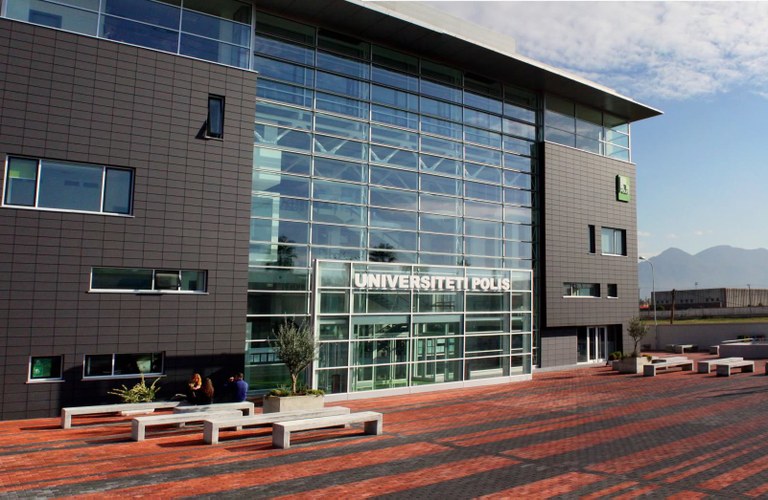 Polis University
Tirana, Albania
Web Site
Image source/credits: internet
Associate Members
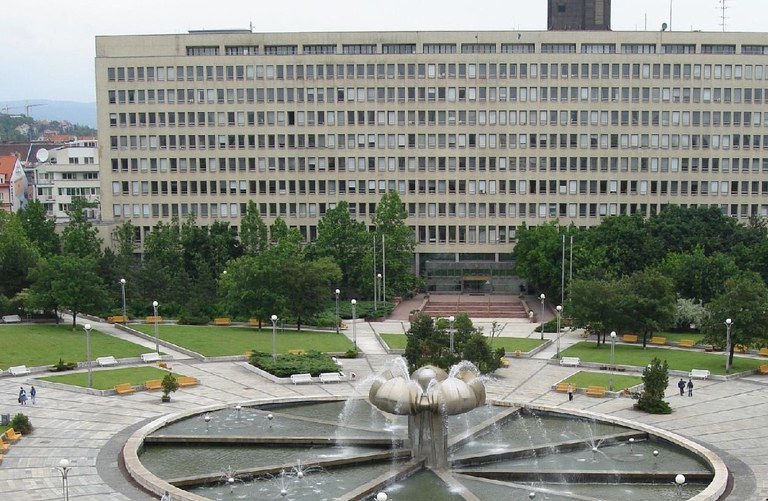 STU - Slovak University of Technology
Bratislava, Slovacchia
Web Site
Image source/credits: internet
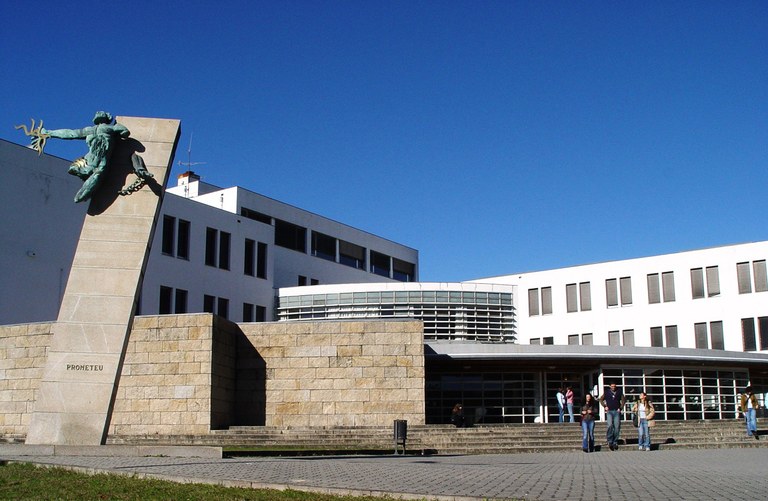 University do Minho
Guimaraes, Portogallo
Web Site
Image source/credits: internet
Industrial Partner
Scientific Collaboration between DA/UniFe IDAUP e Focchi SpA (Focchi Group) 2019
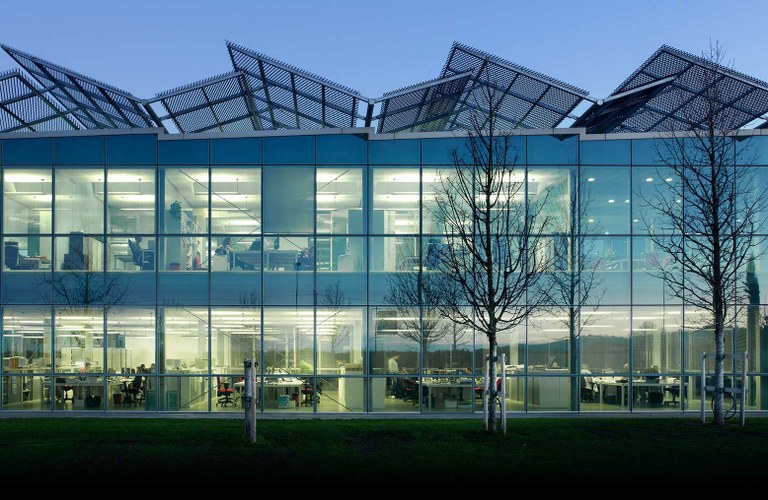 Focchi S.p.A.
Poggio Torriana, Rimini, Italy
Web Site
Image source/credits: internet
Awards
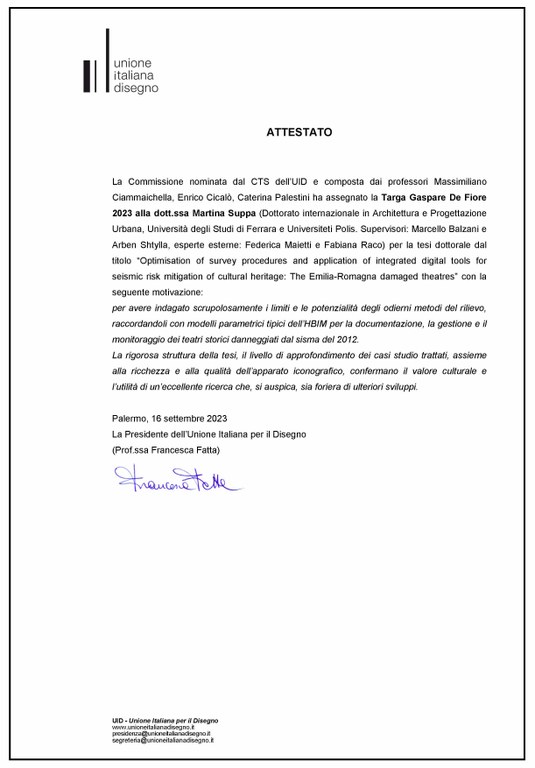
Martina Suppa vince il premio Targa Gaspare De Fiore 2023 dall’Unione Italiana Disegno (UID)
Thesis Supervisor DA-UniFe: Prof. Marcello Balzani
Thesis External Supervisor POLIS University: Prof. Arben Shtylla
External Experts : Prof. Federica Maietti e Dr. Fabiana Raco.
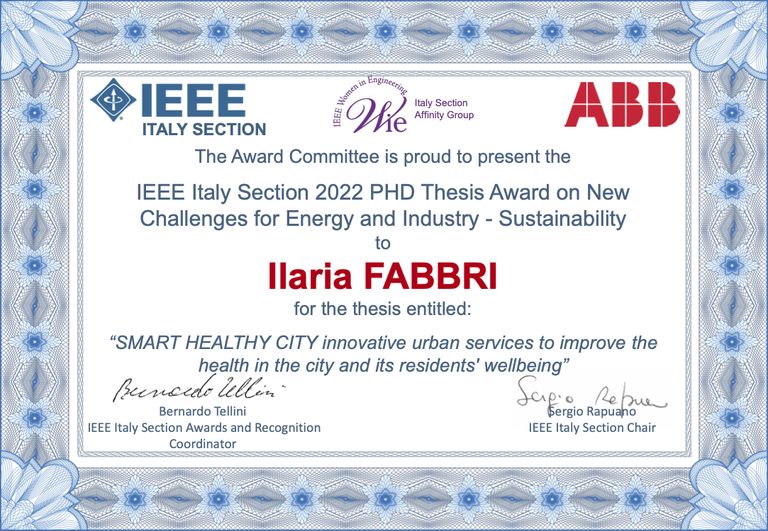 Ilaria Fabbri wins the ABB-IEEE Award 2022 for best Master and PhD theses - Sustainability Category
Thesis Supervisor DA_UniFe: Prof. Gabriele Lelli
Thesis External Supervisor POLIS University: Dr. Llazar Kumaraku
External Expert : Prof. Stefano Capolongo (PoliMi)
 Alessandro Pracucci among the winners of “Giulio Natta e Nicolò Copernico” Awards 2018
Thesis Supervisor DA_UniFe: Prof. Theo Zaffagnini
Thesis External Supervisor POLIS University: Prof. Emeritus Luljeta Bozo
Expert DA: Dr. Giacomo Bizzarri
Elena Dorato among the winners of “Giulio Natta e Nicolò Copernico” Awards 2017
Thesis Supervisor DA_UniFe: Prof. Romeo FARINELLA
Thesis External Supervisor POLIS University: Prof. Artan FUGA
External Expert: Prof. Antonio BORGOGNI
Scientific Publications
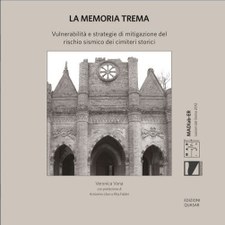 2024
2024
La memoria trema. Vulnerabilità e strategie di mitigazione del rischio sismico dei cimiteri storici
Quasar, Collana MadLab ER. Lezioni dal Sisma del 2012, Italy
Veronica Vona
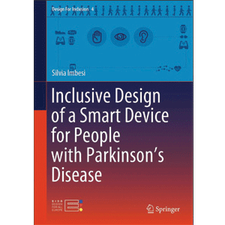 2024
2024
Inclusive Design of a Smart Device for People with Parkinson’s Disease
Springer, Switzerland
Silvia Imbesi
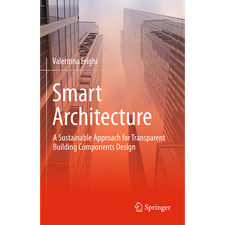 2022
2022
Smart Architecture. A Sustainable Approach for Transparent Building Components Design
Springer, Switzerland
Valentina Frighi
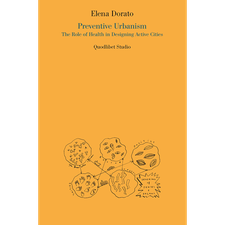
2020
Preventive Urbanism. The Role of Health in Designing Active Cities
Quodlibet Studio, Collana Città e Paesaggio, Italy
Elena Dorato
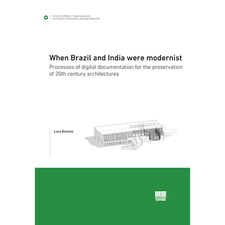
2020
When Brazil and India were modernist. Processes of digital documentation for the preservation of 20th century architectures
Maggioli Editore, Italy
Luca Rossato
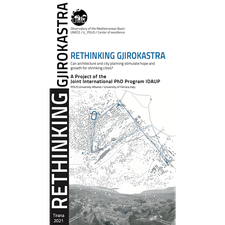
2021
OMB No.7 Gjirokastra
Polis University
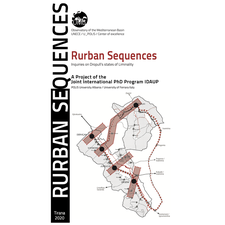
2020
OMB No.6 Rurban Sequences
Polis University
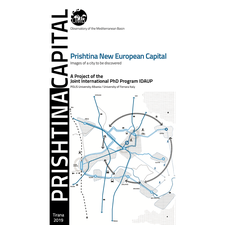
2019
OMB No.5 Prishtina New European Capital
Polis University
2018
OMB No.4 Projecting Shkodra
Polis University
2019
Landscape Paradigms and Post-urban Spaces: A Journey Through the Regions of Landscape
Springer, Switzerland
Roberto Pasini
2018
OMB No.3 When a River Flows
Polis University
2017
How to face the scientific communication today. International challenge and digital technology impact on research outputs dissemination
Medici, Marco; Modugno, Valentina; Pracucci, Alessandro
2016
OMB No.2 Albanian Riviera
Polis University
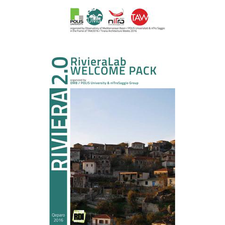
2016
OMB No.1 Rivieralab Welcome Pack
Polis University
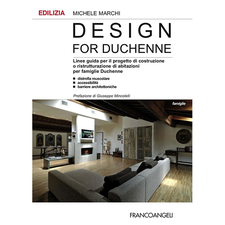
2016
Design for Duchenne. Linee guida per il progetto di costruzione o ristrutturazione di abitazioni per famiglie Duchenne
Michele Marchi
PhD Archive
Discover our PhD Archive, which collects the activities and achievements of the International PhD in Architecture and Urban Planning (IDAUP).
What you will find:
- Academic Boards by Cycle: An archive organized by academic boards for each cycle.
- PhD Candidates & Alumni: Profiles and information on all active and graduated PhD students.
- PhD Theses: Access to dissertations from previous cycles.
- Educational Activities: A record of activities conducted within the program.
- Awards & Recognitions: A list of awards received by our PhD students over the years.
- Publications: A catalog of scientific publications produced as part of IDAUP.
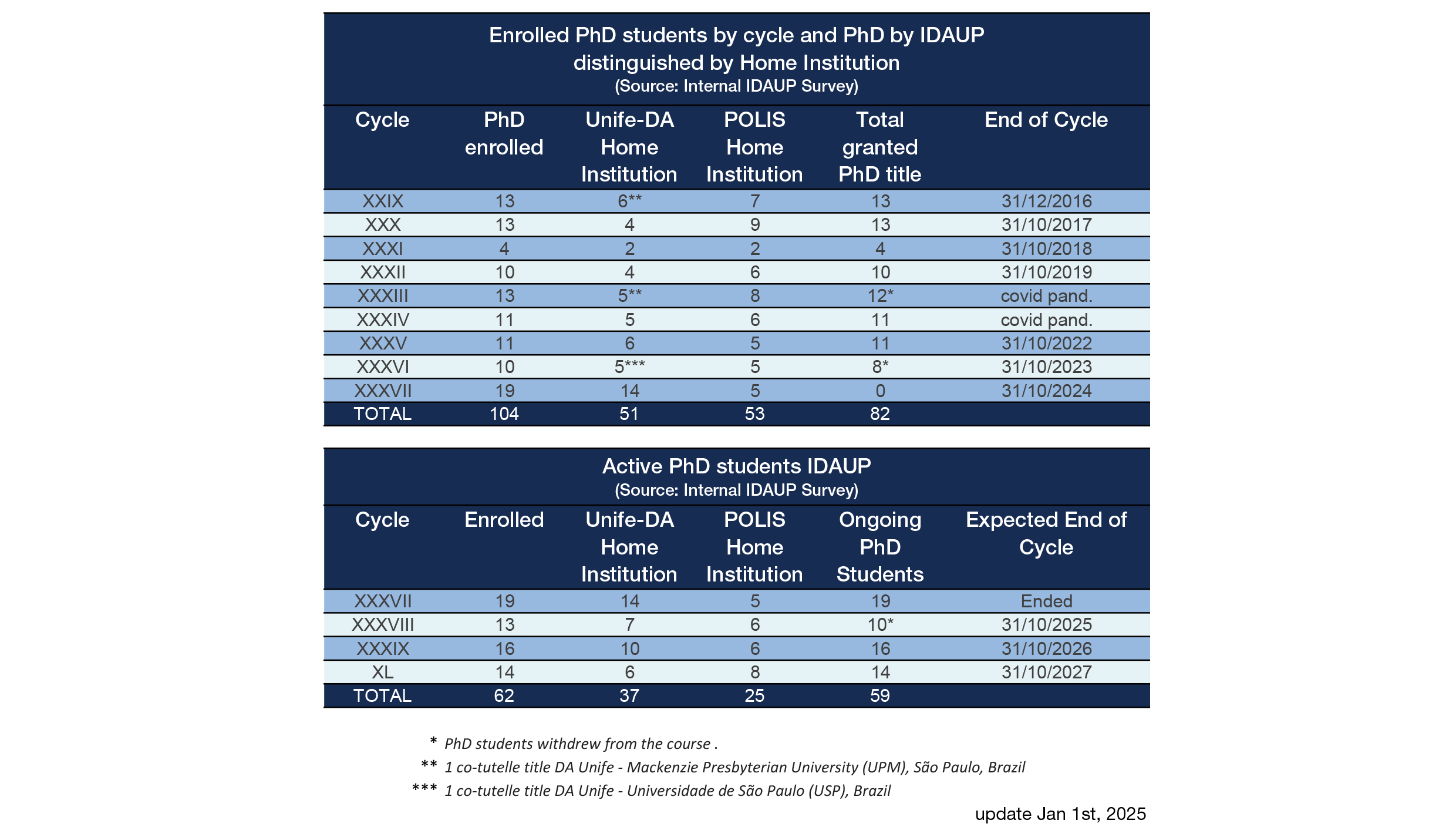
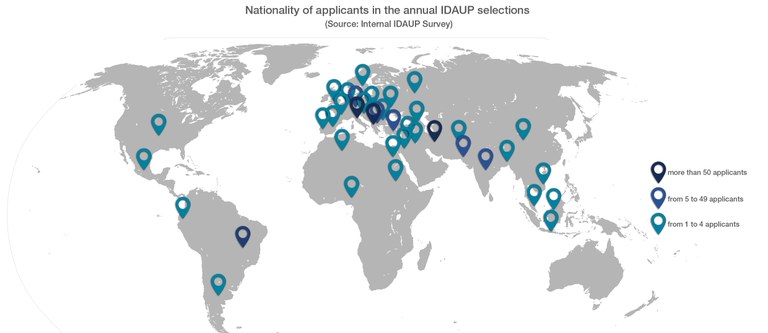
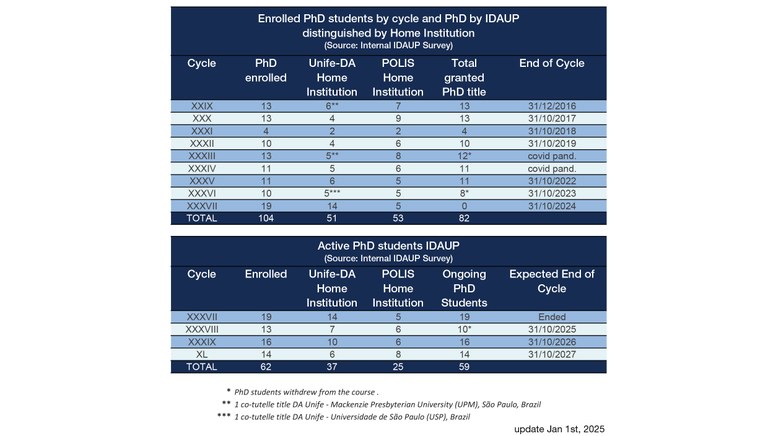
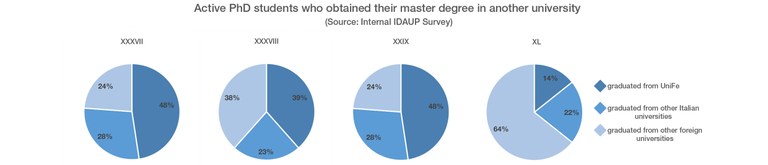
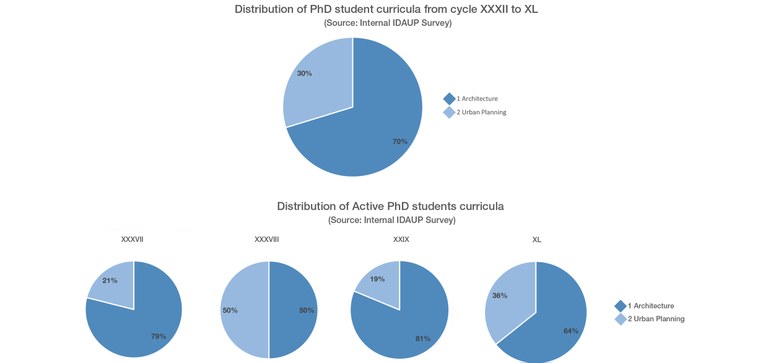
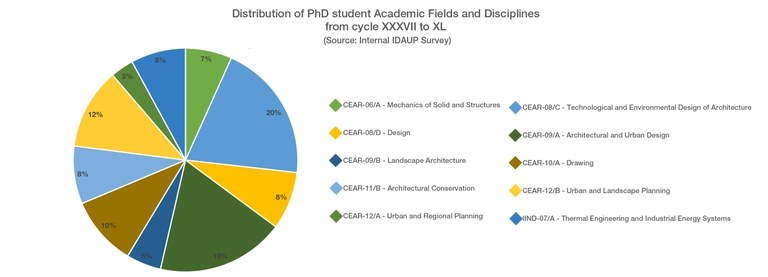
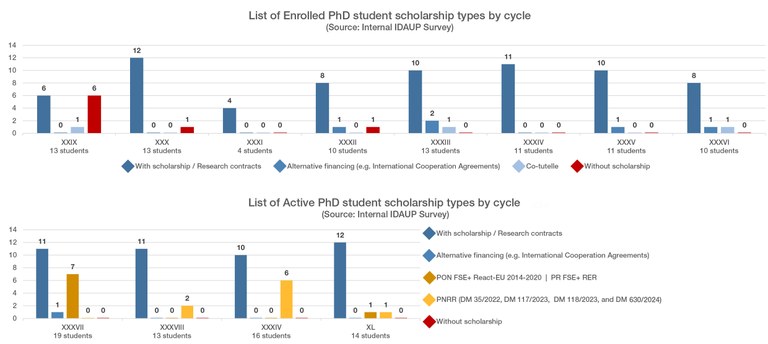
- IDAUP Statistics: Data and insights about the program.



Contacts
Info IDAUP
idaup@unife.it
Coordinator IDAUP
Prof. Theo Zaffagnini
Vice-Coordinator IDAUP
Prof. Besnik Aliaj
besnik_aliaj@universitetipolis.edu.al
Vice-coordinator DA IDAUP
Prof.ssa Veronica Balboni
DA PhD Programme Supervisor
Dr. Elena Dorato
POLIS PhD Programme Supervisor
Dr. Malvina Istrefaj
Credits
Contents edited by Prof. Theo Zaffagnini
Events and News IDAUP
-
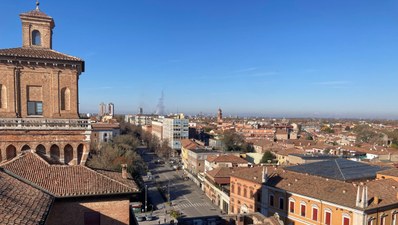 Dal 6 al 17 luglio il Dipartimento di Architettura ospiterà il dodicesimo Workshop internazionale IDAUP "Designing Responsibly: Interdisciplinary Research and Innovation"
 -
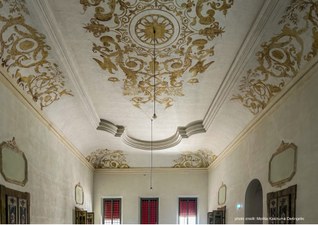 Presentazione del corso dottorale IDAUP del Dipartimento di Architettura (DA) dell’Università degli Studi di Ferrara consorziato con POLIS University (Tirana, Albania) - Introduction to the IDAUP doctoral course of the Department of Architecture (DA) of the University of Ferrara in a consortium with POLIS University (Tirana, Albania)